


Epidemiology, early detection, and management of breast cancer in China: A comprehensive review
Breast cancer represents a significant and growing public health challenge in China, marked by a rising incidence and distinct variations across age groups and geographical regions. This review synthesizes recent evidence regarding the epidemiology, early detection, and early treatment in the Chinese context. We outline current patterns of disease burden and the spectrum of risk factors—both modifiable and non-modifiable. We note ongoing shifts linked to reproductive trends, lifestyle changes, and an aging population. Screening practices are increasingly evolving towards stratified, risk-adapted pathways. These approaches often combine mammography with adjunct imaging modalities such as ultrasound, digital breast tomosynthesis, or magnetic resonance imaging for selected populations, while artificial intelligence is under active investigation to enhance image interpretation and streamline workflow.

Leukemia epidemiology in China: Burden, trends, and determinants in the 21st century
This comprehensive review integrates population-based registries, hospital databases and Global Burden of Disease data to describe the evolving leukemia burden in China from 2000 to 2022. The overall incidence has stabilized nationally, but the absolute number of cases continues to increase as the population ages. A bimodal age pattern persists, with acute leukemias clustering in young children and older adults, while chronic forms predominate in mid-to-late life, and males are consistently more affected by all subtypes. Rapid expansion of haploidentical hematopoietic stem cell transplantation has resulted in marked survival gains for both acute myeloid leukemia and acute lymphoblastic leukemia, and its seamless integration with molecularly targeted agents, venetoclax-based regimens and chimeric antigen receptor T-cell therapy has transformed acute leukemias into potentially curable diseases for an expanding proportion of patients. In parallel, universal access to tyrosine kinase inhibitors and standardized molecular monitoring have turned chronic myeloid leukemia into a manageable chronic condition, and survival of patients with chronic lymphocytic leukemia is improving as novel Bruton’s tyrosine kinase and BCL-2 inhibitors diffuse into clinical practice.

National Health Commission guidelines for diagnosis and treatment of colorectal cancer in China (2025 edition, English version)
The incidence and mortality of colorectal cancer in China continue to rise, with approximately 520,000 new cases and 240,000 deaths in 2022, posing a significant public health challenge (1). The National Health Commission of the People’s Republic of China Guidelines for Diagnosis and Treatment of Colorectal Cancer (2025 edition) (hereinafter referred to as “the Guidelines”) was revised by nearly one hundred multidisciplinary experts organized by the Chinese Medical Association Oncology Branch, which is entrusted by the Department of Medical Administration of the National Health Commission. Building on the core principle of “evidence-based medicine, combined with Chinese practice” since the first edition in 2013, the Guidelines add a chapter on “Surgical treatment of anal canal cancer” and a section on “New technologies and advances in diagnosis and treatment of colorectal cancer”.

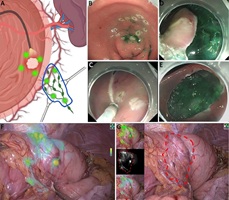
Expert consensus on multidisciplinary management of laparoscopic-endoscopic cooperative surgery combined with sentinel lymph node navigation surgery for early gastric cancer (2026 edition)
With the advancement of surgical techniques and enhanced management of early gastric cancer (EGC), minimally invasive function-preserving surgical approaches have emerged as a common goal for patients and clinicians. Laparoscopic-endoscopic cooperative surgery combined with sentinel lymph node navigation surgery (LECS-SNNS) has drawn increasing interest because of its dual benefits of minimal invasiveness and organ function preservation. However, robust evidence-based support for guiding clinical implementation remains limited. To address this gap, we systematically evaluated available studies on the clinical application of LECS-SNNS in EGC and integrated expert insights to formulate 20 recommendations.

Updates of CSCO guidelines for colorectal cancer version 2025
Colorectal cancer (CRC) is the most frequently diagnosed malignancy of the digestive system and the second leading cause of cancer-related deaths worldwide. In China, CRC ranks as the second most common cancer with incidence and mortality rates continuing to rise. The Chinese Society of Clinical Oncology (CSCO) first introduced its guidelines in 2017, and since then, they have been updated annually to incorporate the latest clinical research findings, drug availability, and expert consensus. This article presents the key updates in the 2025 edition compared to the 2024 version.

Cancer statistics in China: Epidemiology, risk factors, and prevention
Cancer is a leading cause of death in China, and its epidemiological profile has shifted markedly in recent years. This review summarizes contemporary trends in cancer incidence and mortality, delineates the major modifiable risk factors, and highlights recent national efforts to ease the burden of cancer. In 2022, China recorded 4.8 million new cancer cases (crude rate: 341.7 per 100,000) and 2.5 million cancer deaths (182.3 per 100,000). Lung, colorectal, thyroid, liver, stomach, and female breast cancers accounted for 65% of all diagnoses, while lung, liver, stomach, colorectal, and esophageal cancers constituted 67.5% of cancer deaths. Notable shifts in sex-specific rankings underscored the rising mortality burden of prostate, female breast, and cervical cancers.